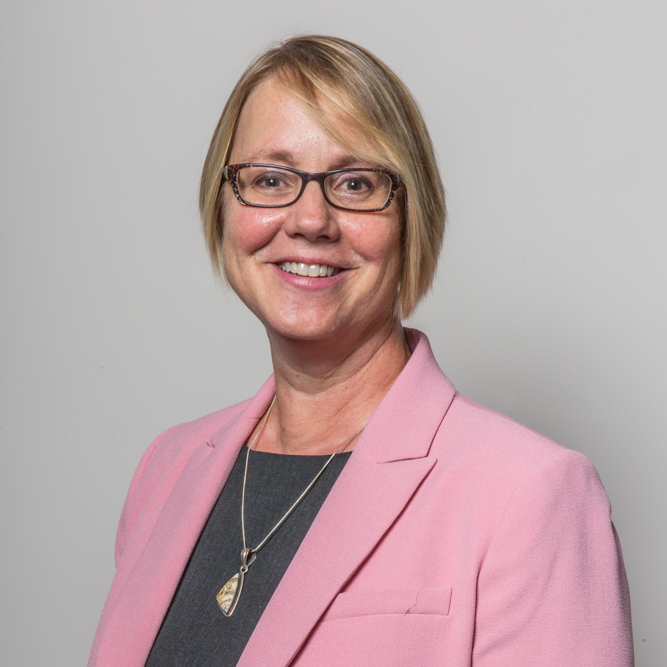
Lighting the Way: How Karin Johnson Helps People with Low Vision Live Independently in King County
A Calling to Serve Through Occupational Therapy
When Karin Johnson finished her training in occupational therapy, she already knew she wanted to specialize in low vision rehabilitation. She was drawn to the holistic nature of the field—helping people not just adapt to their environments, but truly re-engage with the world around them.
“I learned about low vision as a focus area for occupational therapists,” Karin recalls. “I found it fascinating how we can help people find new ways to do what matters most to them—reading, cooking, crafts—by combining skills, adaptive tools, and environmental changes.”
That interest led her straight to The Lighthouse for the Blind, Inc., where she now serves as a Community Independent Living Skills Provider—Low Vision Specialty for King County, a position funded through the King County Veterans, Seniors, and Human Services Levy.
A Day in the Life: From Preparation to Home Visits
No two days are alike for Karin. Her mornings often begin with preparation—mapping routes, reviewing client notes, and checking supplies before heading out to visit people in their homes across King County.
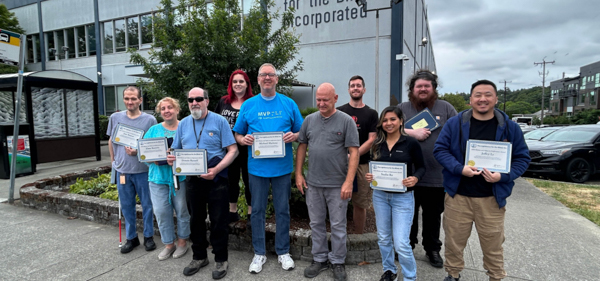
“Most of my clients prefer not to see me first thing in the morning,” she laughs. “So, I usually start my day organizing chart notes and supplies before I head out.” Some visits are with brand-new clients who have never been seen at the Lighthouse before. Others are follow-ups from the Lighthouse Low Vision Clinic, where Karin collaborates closely with the rest of the team, including Dr. Shagas, the Lighthouse’s low vision optometrist, Maya Herzog, occupational therapist, and Lynne St. Pierre, orientation and mobility specialist.
During each visit, Karin works with clients to identify challenges—like using kitchen appliances, managing medications, or reading mail—and then demonstrates tools and techniques that can make daily life easier.
From Microwaves to Smartphones: The Tools That Change Lives
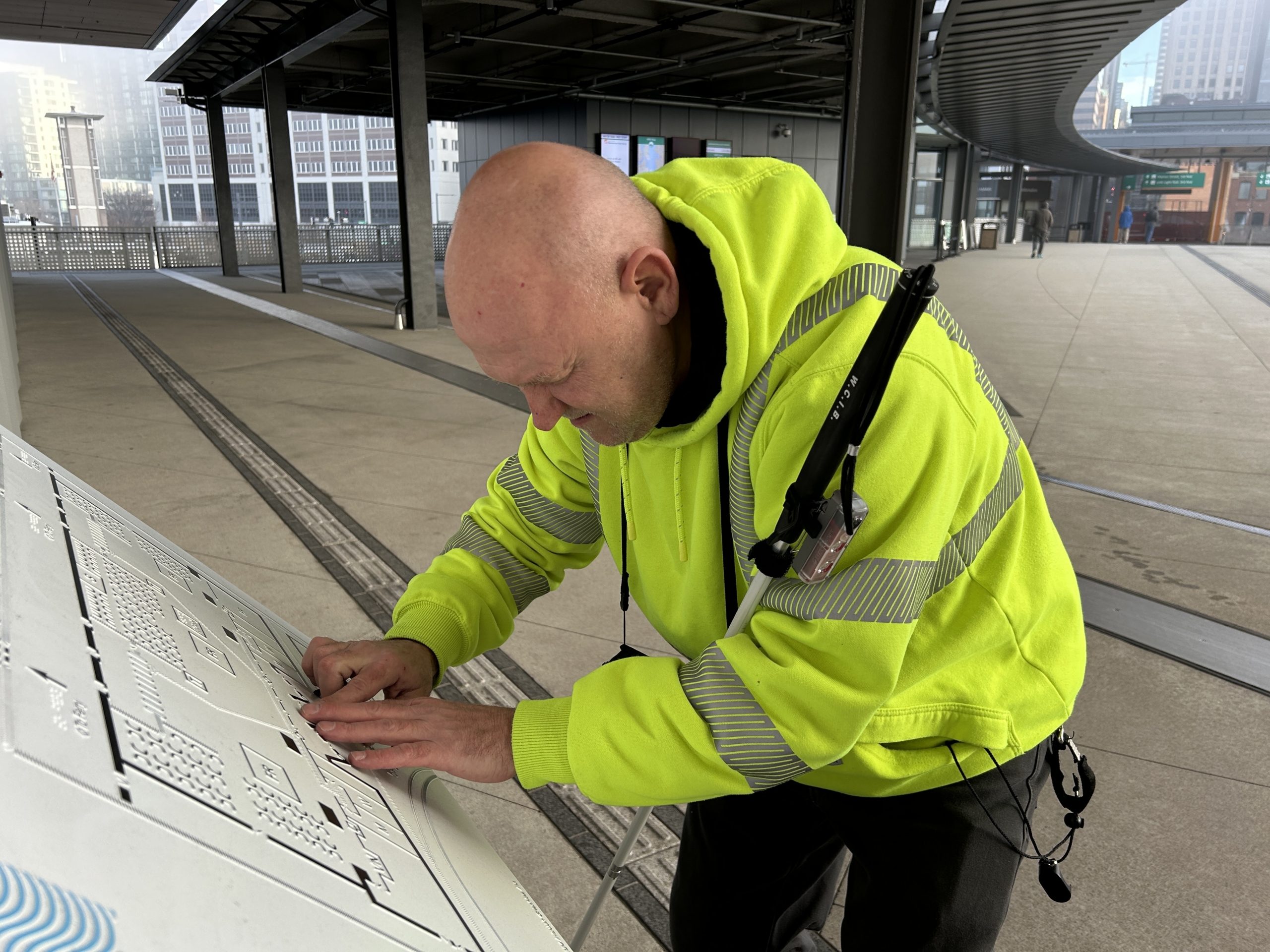
One of the most common struggles Karin sees is with modern appliances. “The sleek, smooth designs that are so popular right now make it almost impossible for someone with low vision to use,” she explains. “So I carry a kit of tactile markers and colorful bump dots that make buttons easier to identify by touch.”
Reading is another frequent challenge. Many clients have partial vision, so Karin refers to their clinic notes or tests their visual acuity to recommend the best magnifier—sometimes a handheld lens, sometimes a digital magnifier that can zoom and change contrast.
And for the tech-savvy—or even the tech-anxious—she provides training on smartphones. “A lot of people don’t realize their iPhone or Android already has built-in accessibility tools,” she says. “Things like the magnifier, text-to-speech, or contrast adjustments can make a huge difference.”
Her work doesn’t stop at gadgets. She helps people with lighting, safe cooking techniques, and medication management, and even teaches self-advocacy—helping clients feel confident asking for the support they need.
Helping People Find Hope After Vision Loss
Vision loss can be frightening, especially when it’s progressive. Karin often meets people who’ve recently been told by their doctors that “nothing more can be done.”
“That’s heartbreaking,” she says. “But it’s also where we come in. There are always new ways to learn to do the things you love—even if your vision changes. We can help people stay independent and continue engaging in their daily lives.”
For many of her clients, independence means staying in the home they love for as long as possible. Karin helps make that a reality by tailoring her training to each individual’s goals—whether that’s safely chopping vegetables, labeling medications with talking audio labels, or connecting them to support groups that provide emotional encouragement.
Inside King County’s Community Partnerships
King County’s Veterans, Seniors, and Human Services Levy (VSHSL) expands access to critical human services to improve overall health and well-being, create thriving communities, and reduce disparities throughout King County.
Through the King County Veterans, Seniors, and Human Services Levy, The Lighthouse for the Blind, Inc. offers independent living services for residents with low vision or blindness. The Levy-funded services are coordinated closely with the statewide Independent Living Services program.
Karin’s program provides home-based visits for people who can’t travel to the clinic, ensuring equitable access to care. “We’re really lucky to have this program,” she says. “At a time when so many public services are shrinking, it’s incredible that we can continue providing these resources for people in King County.”
Her caseload varies — usually a few active clients at a time — but the impact is far-reaching. “Even one or two visits can make a world of difference,” she explains. “Sometimes, all it takes is the right tool or strategy to make daily tasks possible again.”
The Heart of the Work: Trust and Connection
Entering someone’s home is personal, and Karin doesn’t take that lightly. “It’s humbling,” she reflects. “People invite me into their homes, sometimes homes they’ve lived in their entire lives. It’s such a privilege to be welcomed into that space.”
She’s seen every kind of home imaginable—from family houses to senior living facilities to hospice care—and each visit offers something new to learn. “Every person teaches me something,” she says. “Sometimes about adapting to vision loss, sometimes just about life.”
That mutual exchange, she says, is what keeps her grounded. “It’s a collaboration. People have already tried so many things before I arrive. My role is to build on what’s working, troubleshoot what’s not, and give them tools to keep doing what they love.”
Beyond Independence: Building Confidence and Community
At The Lighthouse for the Blind, Inc., self-sufficiency and independence are core values—but Karin emphasizes that these look different for everyone.
“For some people, independence means reading their own mail or managing their medications privately. For others, it’s about relying on family or community support in a way that feels right to them,” she explains. “It’s important to understand those cultural and personal differences.”
Her approach is always person-centered—respectful of each client’s background, values, and goals. Whether it’s teaching new skills or connecting someone to community resources, her mission is the same: to help people rediscover their confidence.
A Journey of Learning—For Everyone
Since joining The Lighthouse six months ago, Karin says the experience has opened her eyes to how many barriers people with vision loss face—and how small changes can make huge improvements.
“The healthcare system can be difficult to navigate, especially for someone with vision challenges,” she notes. “I love that our program offers low-barrier care. We help people find real solutions without red tape.”
She also appreciates the camaraderie of her colleagues. “Everyone at The Lighthouse has been so welcoming. It’s a great team of people who genuinely care.”
When she’s not working, Karin loves to cook, travel, and spend time with her Pomeranian–Papillon mix and two cats. Her next adventure? A trip to Taiwan this fall.
Lighting the Path Forward
For Karin Johnson, this work isn’t just about magnifiers or lighting — it’s about helping people see what’s still possible.
“Vision loss doesn’t mean life stops,” she says. “It just means learning to do things differently. There’s always hope, and there’s always a way.”