Cathy Wilson: Building Trust, Independence, and Opportunity at the Lighthouse
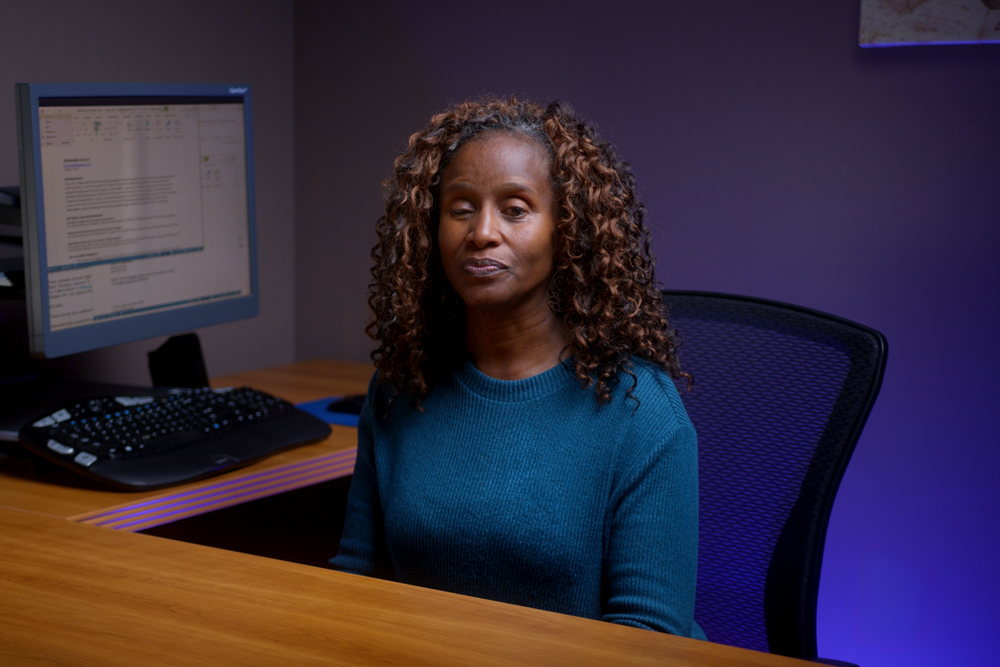
When Cathy Wilson joined The Lighthouse for the Blind, Inc. in 2014, she was rebuilding her career after significant vision loss. Twelve years later, she is a Human Resources Generalist, a trusted resource for employees and managers across the organization, and a leader in Washington’s blindness community.
Her journey has shaped how she approaches her work. Cathy understands what it means to adapt, learn new ways of doing things, and advocate for the tools needed to succeed. Just as importantly, she understands the difference it can make when someone feels heard, trusted, and supported.
Today, she works to create that experience for others.
Finding a New Path After Vision Loss
Cathy began experiencing vision loss in 1986 and lost vision in her left eye in 1990. For years, she continued working and living much as she had before. By 2012, however, she was losing peripheral vision in her right eye and realized she needed additional support.
She connected with the Washington State Department of Services for the Blind and spent eight months at the Orientation and Training Center (OTC) in Seattle, learning skills that would help her navigate life with vision loss.
The transition was difficult. Cathy stopped driving. Reading and other everyday activities she once took for granted became challenging.
Her time at the OTC helped her begin looking forward rather than backward. Instead of focusing on what she could no longer do, she began thinking about what she could do differently.
That shift ultimately helped her return to the workforce.
“I Did Not Lose My Skillset”
Before significant vision loss, Cathy spent 21 years as an accounting manager. At a small company, her responsibilities included accounting, payroll, and employee benefits.
When she was ready to return to work, she began applying for accounting positions with assistance from a job developer. Interviews could be discouraging.
Potential employers questioned how she would handle a fast-paced workplace or use the necessary software as a blind employee. Cathy knew accessible technology could allow her to perform the work. More importantly, becoming blind had not erased decades of professional knowledge.
“I’m blind, but I did not lose my skillset because I lost my vision. You have to learn how to do the same thing you do another way, but the skillset itself, no one can take that away from you.”
A connection through her job developer eventually led Cathy to the Lighthouse.
Building a Career at the Lighthouse
Cathy initially interviewed for a position at the Lighthouse’s Seattle headquarters. Because she lived in Tacoma and was still developing her independent travel skills, she even completed mobility training to prepare for the commute.
Then another opportunity emerged closer to home.
Cathy accepted the position as a special-order buyer at a Lighthouse AbilityOne Base Supply Center (BSC) at Joint Base Lewis-McChord. About a year and a half later, as the BSC stores continued to grow, the Lighthouse created a new Human Resources generalist position to support their expanding workforce. Cathy applied for the role, which allowed her to draw on skills and experience she had developed before losing her sight. She began the position in July 2015 and has remained in Human Resources ever since.
Today, Cathy’s role truly reflects the “generalist” in her title. Her days can include onboarding and offboarding employees, answering questions about policies and benefits, handling employee relations matters, attending meetings, and supporting managers throughout the organization.
It is the human side of the work, however, that has become especially important to her.
Creating Connections Across the Lighthouse
One of Cathy’s priorities is staying connected with managers and employees at 11 Lighthouse Base Supply Center locations.
With so many locations and responsibilities competing for her attention, Cathy developed a system to make regular outreach part of her routine rather than waiting until someone contacts HR with a problem.
She has seen how a simple check-in can prevent what she calls “a little pebble” from becoming “a mountain.”
Those conversations also help build trust before a difficult situation arises.
“I always want the employees to feel heard and the managers to feel like they’re being supported,” Cathy says.
She has also learned that every location has its own culture and communication style. Supporting people effectively means understanding those differences, listening carefully, and knowing how to meet people where they are.
A Leadership Style Built on Trust
Cathy doesn’t define leadership by whether someone supervises a team.
“Leadership isn’t just about supervising people,” she says. “It’s about having someone that you can trust and rely on.”
That philosophy guides her approach to Human Resources.
Cathy wants employees and managers to know they can have candid conversations with her. When an employee relations issue arises, she helps people work through the emotions surrounding the situation, focus on the facts, understand Lighthouse policies, and develop a path forward.
Her goal is not simply to solve a problem. It is to cultivate relationships that make productive conversations possible in the first place.
Learning New Ways to Work
Cathy brings that same persistence to accessible technology.
As a JAWS screen reader user, she participated in approximately six months of Lighthouse computer training, refreshing her knowledge of Excel, Windows, Microsoft Office, Outlook, and internet navigation.
She continues learning on her own whenever she encounters a new challenge.
One example is Paycom, the Lighthouse’s human resources information system. Cathy has spent time researching, experimenting with keyboard shortcuts, and applying JAWS techniques she learned in other programs.
Eventually, she realized many of the accessibility skills she already possessed could be transferred to Paycom.
That realization was important. She did not need to “recreate the wheel.” She could take what she already knew and apply it differently.
It echoes something Cathy learned much earlier in her journey: adapting how you accomplish a task does not change your underlying ability to do it.
Helping Others Find Their Own Path
Although Cathy no longer works directly in talent acquisition, recruiting remains close to her heart.
She often talks with people who are blind about employment and Lighthouse resources. She also connects people who are newly blind with services that may help them build skills and independence.
Cathy remembers talking with one job seeker who worried that employers would not hire him because he needed a large monitor or CCTV to work.
She reassured him that providing accessible tools and setting employees up for success is central to the Lighthouse mission.
Then she told him why she was so confident.
“I know so because I’m blind,” Cathy said.
For someone uncertain about what employment might look like after vision loss, talking with a blind HR professional can itself demonstrate what is possible.
“I really enjoy helping people find their journey, just like I had to,” Cathy says.
Extending Her Leadership Across Washington
Cathy’s commitment to empowering people who are blind also extends beyond her work at the Lighthouse.
In 2026, she began her first term as president of the Washington Council of the Blind (WCB), a statewide organization serving and advocating alongside people who are blind and low vision.
Her presidency builds on years of involvement with WCB. Cathy previously served as First Vice President, demonstrating a progression in leadership within Washington’s blindness community.
The role is a natural extension of the leadership Cathy demonstrates at the Lighthouse. Whether she is supporting an employee, helping a manager navigate a difficult situation, connecting someone with resources, or advocating within the broader blindness community, her approach begins with listening and building relationships.
There is also a meaningful progression in Cathy’s story.
When she first returned to the workforce after vision loss, Cathy relied on a job developer to help communicate her accommodation needs because, as she explains, she did not yet know how to advocate for herself.
Today, she is helping others find their voices—and serving as a statewide leader in the blindness community.
Redefining Independence
Cathy’s understanding of independence has evolved, too.
When she first became blind, she thought independence meant doing everything herself and refusing assistance whenever possible.
Eventually, she realized that everyone needs help sometimes.
Today, independence means having the skills and tools to accomplish what she can on her own—and being comfortable asking for help when she needs it.
Rather than focusing on what she cannot do, Cathy focuses on what she can.
“Independence is something that we all do, whether we’re sighted or blind,” she says. “It just depends on how you’re doing it.”
That philosophy carries into her life outside work. Cathy reads Braille regularly to maintain her skills and participates in activities through Northwest Association for Blind Athletes, including kayaking, paddleboarding, tandem cycling, and rock climbing. She also plays beep baseball in Tacoma and enjoys walking, games, and theater with audio description.
Validated, Safe, and Empowered
Looking back on more than a decade at the Lighthouse, Cathy remembers how she felt when she first arrived.
“I never felt so accepted, so trusted,” she says. “It was a safe place. I felt validated. I felt empowered.”
Today, Cathy helps create that same experience for others.
Her path from someone learning to navigate life and employment after vision loss to a trusted HR professional and statewide blindness-community leader illustrates the power of opportunity and self-determination.
For Cathy, the Lighthouse mission is not simply something written on a page. She sees it in employment, accessibility, training, community outreach, and the opportunity for people who are blind to build the lives and careers they choose.
“The Lighthouse is a safe place,” Cathy says. “You feel validated, safe, and empowered.”
After 12 years, Cathy is helping make sure others feel that way, too.