How a DeafBlind Advocate Helped Transform Accessible Transportation in Washington State
Each June, DeafBlind Awareness Week shines a light on the experiences, achievements, and advocacy of people who are DeafBlind across the United States. It is also an opportunity to recognize how accessibility, independence, and inclusion can transform lives.
For Lighthouse employee Chris Loomis, accessible transportation changed everything. And through years of advocacy and collaboration with regional transit agencies, Chris has helped create that same opportunity for countless other blind and DeafBlind riders throughout Washington State.
As a DeafBlind commuter, traveler, and accessibility advocate, Chris worked alongside Washington State Ferries, Sound Transit, and other regional transportation partners to improve wayfinding, tactile accessibility, and communication systems for blind and DeafBlind passengers. His lived experience directly informed improvements that now help riders navigate public transit more safely and independently.
Independence Through Accessible Transportation
Chris began working at The Lighthouse for the Blind, Inc. in 2007. At the time, he was still adapting to vision loss and relied heavily on family and friends for transportation and navigation support. Through orientation and mobility training at the Lighthouse, he learned how to use a white cane, navigate buses and ferries, and travel independently throughout the Seattle region.
That independence became deeply empowering.
“It did such a good thing to my self-esteem to be able to get all the way to work on my own,” shared Chris.
While commuting from Shelton to Seattle for work, Chris regularly used the Bremerton ferry route and regional transit systems. Over time, he became acutely aware of the many barriers DeafBlind travelers faced—from unsafe crossings and unclear pathways to inaccessible communication methods at ticket counters and terminals. Rather than accepting those challenges as permanent, Chris chose to help change them.
Turning Lived Experience into Regional Impact
Chris later joined accessibility committees working with Washington State Ferries and Sound Transit to improve transportation access for DeafBlind riders. Drawing from years of firsthand commuting experience, he helped agencies better understand how blind and DeafBlind travelers navigate public spaces and where accessibility gaps existed.
The committees advocated for practical, real-world improvements, including:
- Tactile wayfinding lines throughout terminals
- Braille and tactile maps
- Improved elevator and restroom signage
- Accessible Pedestrian Signals (APS) at crossings
- Better platform edge markers at train stations
- Communication training for transit employees
- More accessible boarding and navigation systems
Chris explained that before many of these changes, navigating ferry terminals could feel “treacherous,” especially in crowded or fast-moving spaces where missing an entrance or elevator could quickly become disorienting or unsafe.
Today, many of those same spaces include tactile markers, directional indicators, Braille placards, and clearer navigation systems designed specifically to support independent travel. “It’s way more accessible now than it used to be,” Chris said. “It is actually possible to get around independently now, which it wasn’t before.”
Tactile Maps That Empower Independent Travel
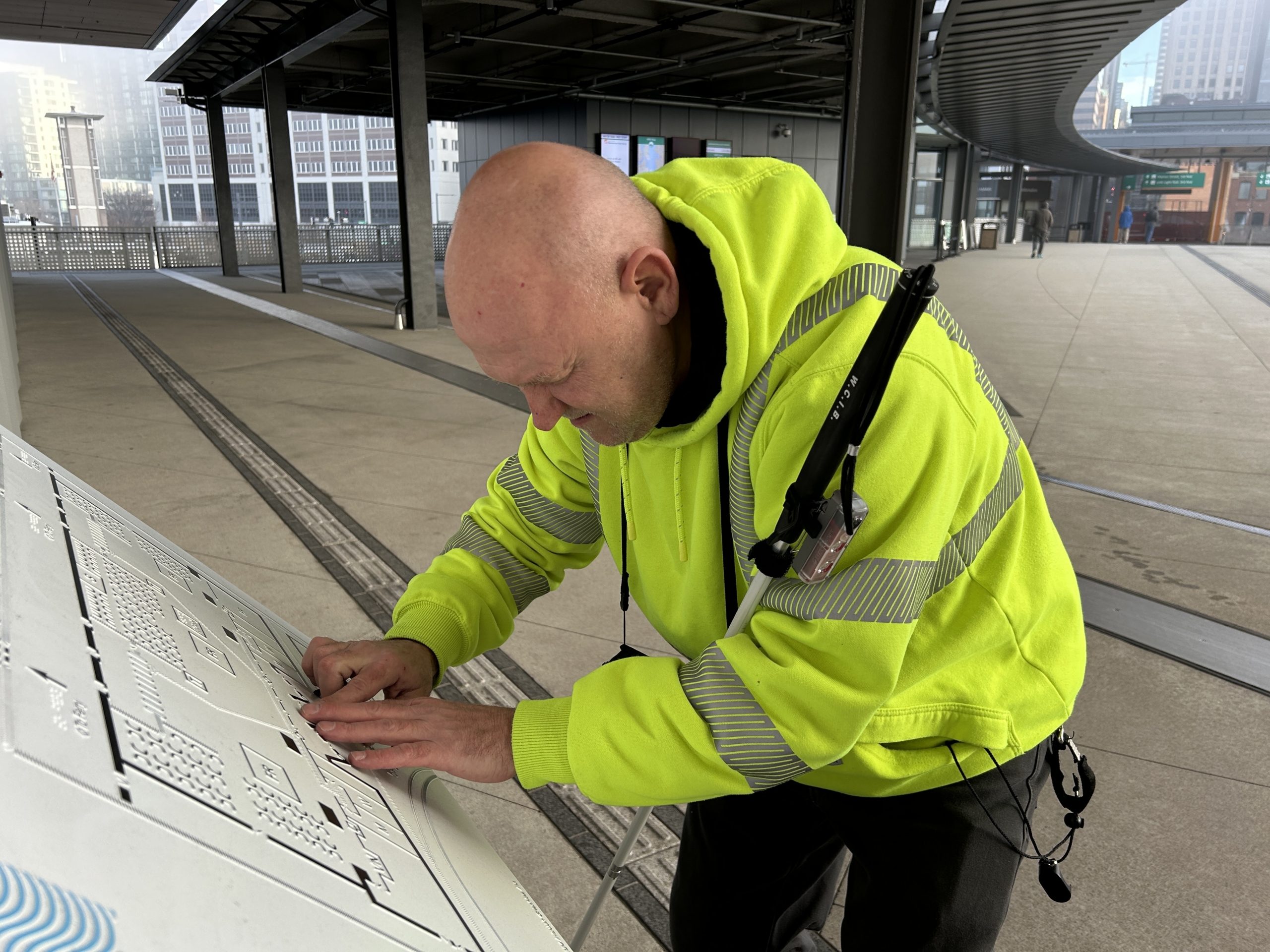
One of the most impactful accessibility upgrades Chris helped advocate for was the installation of tactile maps and wayfinding systems at transportation hubs like the Coleman Ferry Terminal in Seattle.
Using raised symbols, textured pathways, Braille labels, and directional markers, these tactile maps help blind and DeafBlind riders independently locate elevators, restrooms, exits, and boarding areas.
For Chris, seeing those ideas fully implemented was both emotional and affirming.
“It was super cool to see all of the things they actually incorporated into their designs,” he said.
The improvements represent more than infrastructure upgrades—they represent dignity, empowerment, and equal access.
Accessibility Benefits Everyone
Chris believes accessible transportation design improves the experience not only for blind and DeafBlind riders, but for everyone navigating public spaces. Clearer signage, intuitive pathways, safer crossings, and simplified maps make transportation systems easier to use for parents with children, older adults, tourists, and first-time riders alike.
His advocacy has also extended far beyond Washington State. Chris has traveled internationally to countries including Morocco, Kenya, Italy, Portugal, and Germany, working with DeafBlind communities and sharing ideas around accessibility and independent travel.
Celebrating DeafBlind Awareness Week
During DeafBlind Awareness Week, stories like Chris’s highlight the importance of designing communities where everyone can travel, work, and participate independently.
Chris’s journey—from learning how to navigate public transportation independently to helping reshape accessibility across an entire region—is a powerful example of how lived experience can drive meaningful change. “I can go anywhere now,” Chris said. “I’m confident in my ability to travel.”
That confidence and empowerment continue to create ripple effects for future generations of blind and DeafBlind travelers throughout the Puget Sound and beyond.
Learn About our Programs
DeafBlind Community Classes
Orientation & Mobility Program
Jobs at the Lighthouse