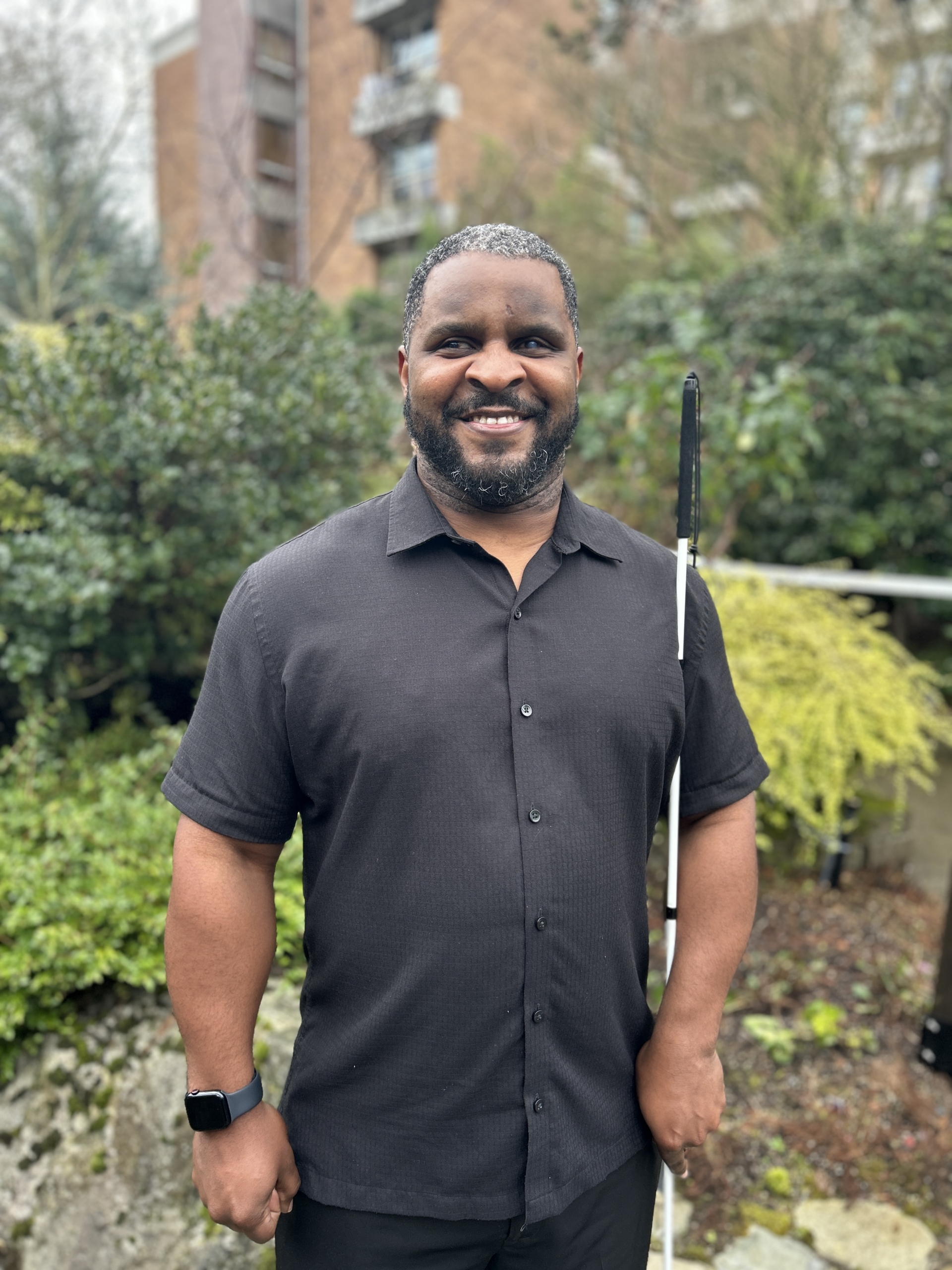
Gregory Wilson: A Journey of Overcoming Challenges and Embracing Leadership
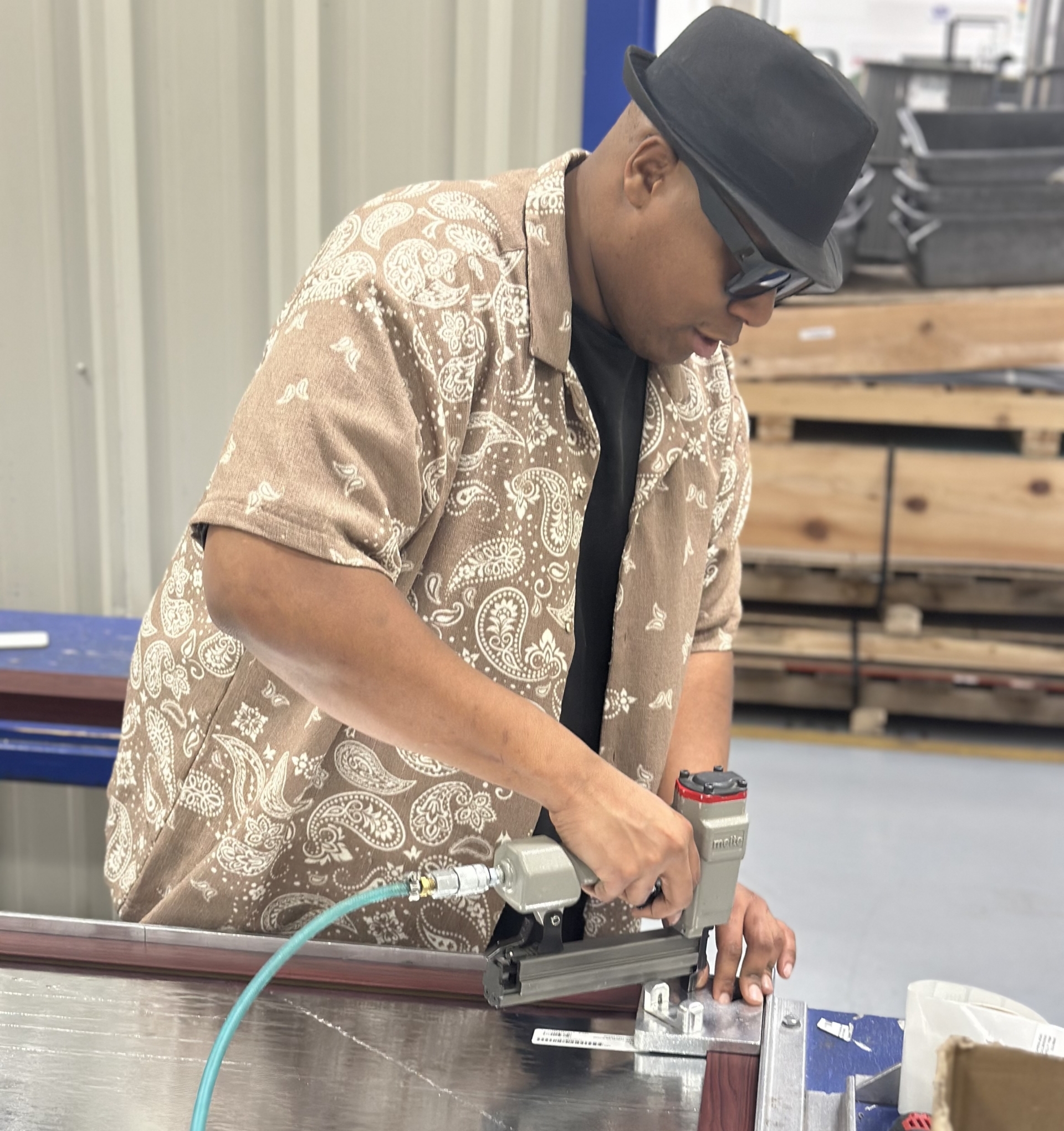
Gregory Wilson’s career trajectory is a story of resilience, adaptability, and growth. Gregory joined The Lighthouse for the Blind, Inc. just over two years ago, starting on the production line. His strong work ethic, attention to detail, and reliability quickly earned him a promotion to Setup Specialist for the Defense business line within his first year.
Gregory’s responsibilities as a Setup Specialist include setting up workstations, ensuring a clean and organized environment for his colleagues, and conducting quality checks on random parts to ensure they meet industry and customer standards. Gregory is also known for stepping up when needed, whether that means filling in for a lead or assisting a coworker who may need to leave early. He has earned a reputation as a dependable team member who is always willing to take on additional responsibilities. Learn more about our manufacturing.
Early Challenges and the Diagnosis of Retinitis Pigmentosa
Gregory’s journey has not been without challenges, particularly when it comes to his vision. At the age of seven, he experienced a sudden and dramatic loss of vision while playing baseball. Although he could still see the pitcher, everything else around him was a blur. This event marked the beginning of a gradual decline in his sight. By the age of 13, Gregory was diagnosed with retinitis pigmentosa, a condition that would ultimately diminish much of his vision. Despite this, Gregory did his best to continue participating in sports and keeping up with his peers.
“I spent too much time trying to fit in with everyone else around me,” Gregory reflects. “There’s good and bad from that experience. I learned how to adapt.” His adaptive strategies allowed him to navigate high school, even though his vision continued to deteriorate. He learned to turn his head in a specific way to see objects and people, even if his vision was limited. Despite the obstacles, Gregory remained resilient, continuing to learn and grow as he navigated his vision loss.
Work Before the Lighthouse: Struggles and Discovery
Before joining the Lighthouse, Gregory faced emotional and logistical challenges in his search for employment. Gregory held odd jobs ranging from landscaping to dog walking. It wasn’t until October 2023, after an eye exam, that he fully accepted the need to use a cane. Gregory discovered the Lighthouse through YouTube, watching videos of people like himself who were working in production roles despite their visual impairments. Inspired by what he saw, he contacted the Lighthouse and ultimately secured a good job.
Life at the Lighthouse: A Sense of Belonging
For Gregory, working at the Lighthouse has been life changing. He speaks about the importance of belonging, describing the work environment as a place where he feels connected to a team that supports each other. “It feels like family,” he says, noting that the job has given him a sense of pride and stability. Gregory appreciates the opportunity to provide for his wife and two children, knowing that his job at the Lighthouse ensures his family’s financial security.
The Lighthouse not only provides a job but has also equipped Gregory with tools for personal and professional growth. Through programs like the Career Development Program, Gregory has learned valuable skills that have helped him navigate both the workplace and his personal life. The program taught him how to communicate more effectively and engage with others in a professional and empathetic manner.
Challenges and Growth in the Workplace
Throughout his time at the Lighthouse, Gregory has faced various challenges, particularly when it comes to managing multiple work orders and keeping track of parts on the production floor. However, he has consistently approached these challenges with a calm, problem-solving attitude. “I always appreciate being able to step up and say, ‘Hey, that’s my mistake,'” he says, demonstrating his accountability and commitment to improving with each experience.
Gregory has also become adept at training others. He recalls a time when he taught a coworker how to assemble a bivalve, a complex task that requires precision and attention to detail. Despite his vision impairment, Gregory was able to guide the coworker through the process using tactile feedback and patience. “Learning how to adapt and teach someone who’s completely new at something … just being patient enough, as long as they’re willing, is the key,” Gregory explains. His leadership skills have continued to develop, and he’s proud to be able to pay forward the knowledge and skills he has acquired.
The Future: A Leader in the Making
Looking back, Gregory is proud of the growth and successes he has experienced, particularly in his ability to learn new skills and pass those skills on to others. “I’m proud of being able to learn something else that I previously did not know how to do,” he says. His success isn’t just measured in his technical abilities but also in his leadership, communication, and emotional intelligence—qualities that have made him an asset to his team.