WEBINAR: Pathways to Disability Empowerment | Self-employment & the Vocational Rehabilitation Agency | Part 2
Welcome and Accessibility
Cheryl: Awesome. All right. Welcome, and thank you for joining us and participating in the career webinar from The Lighthouse for the Blind.
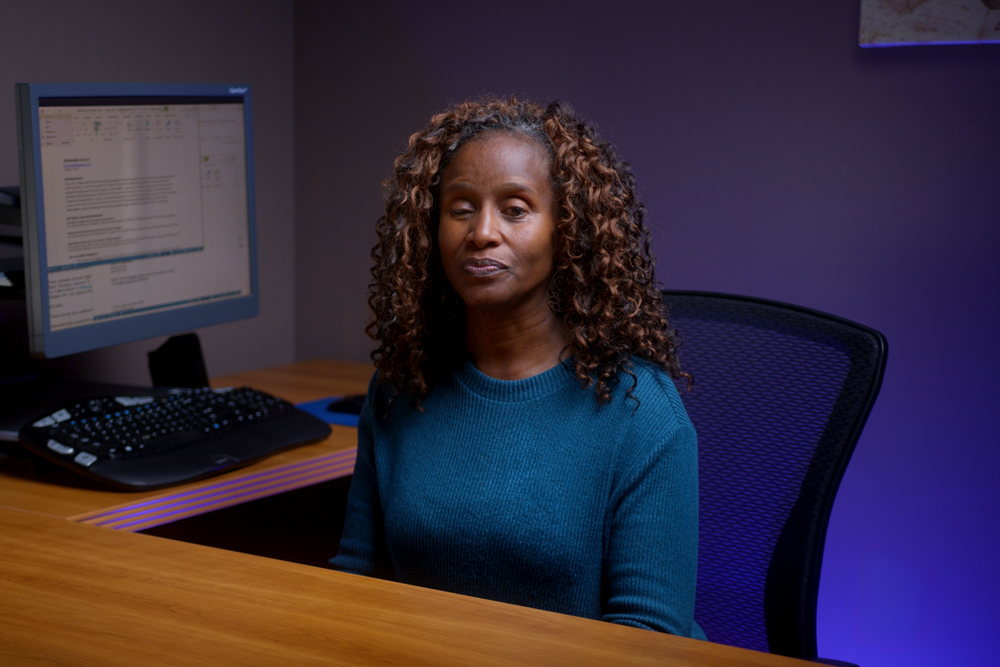
My name is Cheryl Cummings. My pronouns are she/her, and I am the Workforce Development Manager here at The Lighthouse. I am a Black American woman who is blind.
Today, our panelists are three professionals who work at community organizations that assist people with disabilities to start and manage their businesses. Our panelists will introduce themselves in just a moment.
I would also like to let you know that there are two ASL interpreters who are on screen and will spotlight themselves throughout the webinar. Captions are also turned on and available.
I also want to recognize our moderator and host, Elena. Elena will let us know if there are any raised hands or any questions.
This is part of a series of webinars for people who are blind or low vision, DeafBlind, or blind with other disabilities. The purpose of these webinars is to provide you with tools and resources you can use to actively chart your career exploration and development.
Each month, we focus on different topics, such as tools to write a resume, the role of using assistive technology in your job search, networking, interviewing, and self-employment. Look for future webinars, and please do join us.
Panelist Introductions
Cheryl: To get us started, I am going to invite our panelists to introduce themselves. First, can you tell us your name, your title, the name of your company, and whatever other information you’d like to share with us?
Aarti, would you like to start?
Aarti: Thanks for inviting me, Cheryl. It’s a pleasure to be here today.
My name is Aarti Sahgal. I am the founder and CEO of Synergies Work and Synergies Seed Fund.
Synergies Work is building an ecosystem providing accelerator services for small business owners, and Synergies Seed Fund is the first CDFI to provide loans to small business owners with disabilities.
I am an Asian woman, and from my Georgia accent, you can see I am a native of Georgia. So there I am. Thanks for inviting me.
Cheryl: Thank you for being here. Nikki?
Nikki: Yes. Hello. It’s lovely to be here.
My name is Nikki. I am the Director of our Small Business Programs at the National Disability Institute.
NDI has been around for about 20 years. If you’re not familiar with it, they do a lot of advocacy, a lot of financial empowerment work, and, more recently, some support of small businesses.
I am a white woman with glasses and long hair. My pronouns are she/her also. Thanks for inviting us to be here, Cheryl.
Cheryl: I’m so excited that you’re here.
We have one more guest. Santiago, did you make it here?
Santiago: Hi, everyone.
Cheryl: Hello.
Santiago: Hey. It’s great to be here.
Hi, everyone. I’m Santiago Garcia. I’m the Program Director at 2Gether-International, and we are the largest accelerator for disabled tech founders.
I’m very honored to be here. It’s a pleasure to be here with you all. I’m a Latino man in my mid-30s. I have black hair — I would say gray nowadays more than black. I have a beard. I’m wearing a white T-shirt. My pronouns are he/him.
Cheryl: All right. Thank you all. I am so excited. I’m so looking forward to our conversation this afternoon.
Webinar Context
Cheryl: Before we do that, I just want to say that this is the final session of a three-part series of workshops on self-employment that we started in January.
In session one, we had three business owners who are blind or low vision who shared their experiences of starting and running a business.
In session two, there were two professionals, or two representatives, from Vocational Rehabilitation agencies who talked about the type of assistance that VR agencies offer individuals who have identified self-employment as their employment goal.
Both of these webinars are available on The Lighthouse’s YouTube channel, and you can certainly go to YouTube and look them up. The address is www.youtube.com/user/SeattleLighthouse.
Today, as I said, we’ve got these three marvelous people who are here to share information about their organizations with us.
Organization Origin Stories
Cheryl: Let’s get started. I’m going to go back to our panelists and ask you if you could tell us a little bit about the origin story of your organization. If you want to take two or three minutes to talk about what led to the creation of your organization, that would be fantastic.
We’ll start with Santiago, then Nikki, and then Aarti.
Santiago: Sure. Thanks, Cheryl.
2Gether-International is the largest accelerator for disabled founders. It’s been around for over a decade. It was founded by Diego Mariscal, our CEO and founder.
Diego was actually born in the U.S. by accident, as he always tells the story. His parents were Mexican and were shopping in the U.S. He grew up in Monterrey later, having suffered cerebral palsy when he was born.
He was surrounded by the entrepreneurial world of Monterrey, which is like the Silicon Valley of Mexico. Over the years, Diego realized that there were all these people who were coming out as disabled when they were already rich and famous. That’s when he started really thinking about redefining how people think about disability and showing the competitive advantage of disabled people in the entrepreneurial space, more specifically in the startup space.
That’s how 2Gether-International was created. Nowadays, we run different programs for disabled folks on their entrepreneurial journey, whether they’re at a very early stage or at a traction stage. We accelerate their startups through different programs within different stages of their entrepreneurial journey.
So far, we have supported over 600 founders who have collectively raised $70 million in funding, revenue, and other sorts of investments. We’re super proud of the work that we do.
We have a very exciting year ahead, where we are looking at supporting double the amount of founders we have supported in the last decade. We’re looking at supporting 600 folks this year in different regions and in different stages of their startups. Super excited to be here.
Cheryl: Nikki?
Nikki: National Disability Institute is a national nonprofit organization that was started by a person called Michael Morris 20 years ago.
Predominantly, it was begun because he recognized that within the financial landscape — access to capital, financial products, and things like that — it appeared that folks with disabilities were not given equal access or equal understanding of financial empowerment and financial health.
That’s how NDI started. We still have a lot of programs that really focus on financial literacy and financial empowerment, but then we also have an employment side, and now our self-employment side. That’s a little bit about NDI.
Cheryl: Thank you.
Aarti: I’m going to be on the block, okay?
To take a dig at Santiago, I’m not in my 30s, but I like to believe that I’m still in my 30s.
We are six years into this space. I started this work because I’m a parent, and my youngest son has Down syndrome.
For the past 20 years or so, I have been wrapping my head around why there are two different worlds that exist among us: one for people with disabilities and one for people without disabilities. It is this quest that made me work initially with the Georgia Council on Developmental Disabilities and talk about inclusive workforce strategies.
Then, six years back, my oldest son did his first startup. It made me pause and think: if he has that choice — and we use the word “choice” so loosely in our disability world — yet there are no choices when it comes to employment. They are decided by the diagnosis, and the opportunities are limited.
That got me to go to the Atlanta startup world, since I’m based in Atlanta, and say, “Hey, can we just partner?” There are thousands of accelerators in the country. Maybe we could find one partner who would be willing to open its doors intentionally and welcome folks with disabilities.
I was literally shown the door. It was that stubbornness that made me decide, “Okay, if you’re not going to do it, I’m going to do it.” That’s how Synergies Work was born.
As the name stands, it’s all about building synergies. How do we close the gap that exists between the disability community and the business community? That, in a nutshell, is what we are trying to do.
That’s how the ecosystem I talked about is what we have created in the past six years. We provide supports to entrepreneurs with disabilities, whether they are starting their businesses or scaling them.
We realized that access to knowledge that might be accessible to everybody, whether through SBDCs or other support organizations, is not so easily available to folks with disabilities.
We do know that there is an opportunity for people with disabilities who have higher health concerns and more supports to fall through the cracks. While they have a tendency to start new businesses, they also have a greater tendency to fail.
We have created the first-of-its-kind community hub, or digital platform, that allows folks to do peer-to-peer networking. We believe that there are so many assets and so much talent, and people need to talk to each other and learn from each other.
Finally, to close the financial gap, we launched the CDFI, a Community Development Financial Institution, in September last year to provide small business loans.
That’s what I do. Somebody asked me earlier today, “What’s the vision?” The vision is that there should not be organizations like us in a perfect world. There should not be any place for us.
Cheryl: Wow. Thank you so much.
Services and Programs
Cheryl: My next question asks you all to talk a little more specifically about services and programs. Aarti, since you started to go down that road a little bit, could you continue by telling us, in a little more detail, what services and programs you offer?
Aarti: Yes. We have learned through trial over the past six years.
We run a program called Igniting Ideas, which is for aspiring founders, people who have ideas but don’t know how to go forward with that idea. They may be selling their products and services at farmers markets, to friends, families, and fools, as we say, or to disability organizations. That’s where they are doing it, but that’s not, I believe, the real test of the business.
How do you take it and scale it?
It’s a three-month program. Currently, we are accepting applications for the Igniting Ideas program, which kicks off on April 1. It is run by two coaches. As I said, everything is done virtually. We provide one-on-one support.
It’s a pretty intensive program. You learn, apply, come back, and rinse and repeat until it becomes an integral part of how you think. If you change your thinking, you change how you behave, and you change outcomes. That’s the crux of the programming.
Most of the founders that we have — everybody has to be a person with a disability to be part of our programming. It is not open to people who do not have a disability. Currently, actually, we’ve had applications this year from other folks also who want to join but do not necessarily have a disability, so we’ll see what happens.
After the three-month program, everybody has access to the community hub, which is the resource hub. We also do one-on-one supports even after everybody has moved out of the accelerator program.
There are mentorships provided to the founders. Then, as I said, there is the financial piece. You can apply for a loan as you see fit. It’s open to everybody.
Cheryl: Okay. Elena is in charge of questions, so we’ll come to those in a minute.
Santiago, what about you? You started telling us about the focus on tech startups led by people with disabilities. Can you share more details on what types of services or programs people access through 2Gether-International?
Santiago: Sure. That makes sense, and in certain aspects it’s very similar to the work Aarti is doing.
We offer several types of accelerators for disabled founders. Some of them are also supported by NDI. We’re building them in partnership with them.
This year, we’re going to have three accelerators. One of them is a Health Equity Accelerator, for which we just closed applications. We had over 100 applicants. I echo what Aarti was saying: in an ideal world, we shouldn’t have this kind of differentiated program. But while we are working toward building a more equal world, we still see a lot of traction in our programs.
We’re going to select, out of the 100 applicants, 15 startups led by disabled people to take the 10-week cohort that starts on March 31 and finishes on June 6 with a pitch competition.
Then we’ve got a similar accelerator for the summer cohort. It’s very similar to the one starting now for 10 weeks, but it’s not focused on a very specific theme. We’re doing a more generic tech startup accelerator.
We’ve got another one at the end of the year, where we’re also going to be accepting anywhere between 10 to 20 startups starting in October.
Those are the three main programs supporting startup founders through our three accelerators: one starting now, one in summer, and one in fall.
Then we’ve got Venture Labs, which is a pre-accelerator program. We will actually change a little bit the way it is taken, and we will make it open source for everyone. Anyone who is disabled and wants to start a startup business, and has a startup idea, can use it. We help them validate their idea through four weeks of learning. We’re launching that in April, which is very exciting because we’ve supported, so far, 120 startup founders or wannabe founders.
The third pillar of work is our apprenticeship program, which has already been launched and is also on our website. I would like to say that it’s a full circle of the entrepreneurial journey, because that program is for disabled folks we like to call “wannabe entrepreneurs.” They’re not at that stage yet, but they’re interested in the space.
We offer them the possibility to get a paid apprenticeship in an already established startup. We handle the entire process for them, and they work for a startup and learn basics and fundamentals about the startup world. They have a curriculum that has been approved by the Department of Labor, and then they do these apprenticeships at startups. They get the fundamentals to learn about the entrepreneurial tech-driven ecosystem.
Those are the three main ways we support startup founders right now.
Cheryl: Awesome.
Let’s pretend for a second that I have no concept of what exactly an accelerator class or program is. Could you give me an example? Let’s say I make it into the Health Equity program for 10 weeks. What am I doing there?
Santiago: I love that. That’s a really good question.
I come from the startup world. I’m a startup founder, and the program we build is probably what we, as the people teaching the class, always dreamed of.
This is a 10-week class focused on three main pillars: a technical side, a community side, and a speaker side.
The technical side is where we teach fundamentals on how to scale your idea or your business. It goes all the way from raising capital to building what we call the customer machine, meaning getting more and more customers. We teach how to build a startup in terms of value and team, and how to work as a disabled entrepreneur in the startup space.
We teach startup founders all these fundamentals to get their startup to the next level. That’s the theoretical side.
The community side is a weekly meeting we have with all of our cohort, where they exchange ideas and put them into practice. What they’ve learned in the theory class, they do in a community session.
At the end of each week, we have a special guest speaker who is an expert on the topic. They really go through the personal experience. Ideally, those guest speakers are from our own community, so they’re 2Gether-International alumni. They can speak in their own words about what they’ve been through and what they’ve experienced in that specific topic.
Basically, at the end of those 10 weeks, they’re ready to pitch their ideas to investors, and they’ve gone through a 10-week class that will help them scale their business.
Cheryl: Okay. Thank you so much. I appreciate that. I think that’s pretty awesome and definitely breaks down the concept of what’s going on when you hear people talking about accelerator programs.
Nikki, what about your organization? I know you all do a lot.
Nikki: Yeah, we kind of do. We work with Synergies Work — it’s a great name, because synergies absolutely do work. We have to work together. Things we can’t do, Aarti can offer, and Santiago through 2Gether-International does things like that too.
I’ll give you a little bit of a story.
We were asked a few years ago, about four or five years ago now, to do some research on disability-owned businesses. We were asked by a major global financial bank, actually. They wanted to know whether or not they should invest in helping founders with disabilities, and whether there was a need. Did they exist?
Of course, we said absolutely. But we had to do the research.
We interviewed multiple small businesses that were owned by people with disabilities. We talked to service providers. We talked to Vocational Rehabilitation. We talked to accelerator programs and all kinds of things. Really, it was for this report.
What we found was, oh my gosh, just like Aarti found when she was working with her son, there is such a huge gap and a huge need for different services. Unfortunately, traditional entrepreneurial ecosystem providers are not terribly disability informed, or they’re not accessible.
We said, “We’ve got to try and take this on.” We had a grant through the Small Business Administration, and we ran that for a couple of years. Based on everything we learned from that, which was direct services and helping people from idea all the way through scaling multimillion-dollar businesses, we were more recently able to get a federal grant through the Rehabilitation Services Administration.
Our current project — the biggest project we have, though we have a couple of others — is working with any founder, really anywhere in the country. Or any person, any entrepreneur. It doesn’t have to be a founder. They don’t have to have a business. It doesn’t matter what kind of disability they have. It doesn’t matter how old they are. None of that matters. They just have to have a disability and have an idea, a concept, or a business.
They can come to us with that initial sparking idea. They can come to us with an already established business and need to scale. They can come to us, like some people do, who have a business but didn’t know how to administer that business. Maybe they’re in a mess with their taxes, or maybe their customer base isn’t where it needs to be, or they don’t know how to market themselves.
We offer a lot of those things. We partner with many other organizations, so we might say, “Hey, Aarti has something open right now. Go join their networking session.” If we have a tech business that could benefit from Santiago’s program, we can partner there too.
We also have people who are part of our grant who offer tax support and basic things like feasibility of a business, business planning, what happens to my benefits if I’m on SSI or SSDI and I open a business, what happens if I start making revenue or have business assets, and what type of business structure I should start.
We also have someone who helps with marketing and branding of a business: logo design, branding, color schemes, and all kinds of things like that.
I feel like we’re a good place to start, and then we can figure out where that journey needs to take you. It might be to go to Santiago. It might be to go to Aarti.
Certainly, the communities, like Aarti described with their online community, are something we found to be incredibly valuable. People want to talk to others who have been there, done that, and have that journey. They want to leverage each other’s expertise and have that community and camaraderie. That’s a wonderful thing as well.
Cheryl: Thank you so much.
Santiago, as you were speaking, I was not disagreeing. Somebody walked into the office, and I was trying to tell them they didn’t need to do anything at present. I realized I wasn’t muted.
This is really fantastic. Again, I can’t quite explain how excited I am that you’re all three here.
Questions: Program Availability by Location
Cheryl: I’m going to pause because it sounds like there might already be questions. I invite our attendees to raise their hands if they have a question. Let’s ask our panelists, because the work you’re all doing is so necessary and useful.
Elena, do we have any questions?
Elena: Yes. We had one in the chat: “Are these programs relegated to disabled people in their respective states?”
Cheryl: Nikki, do you want to answer first?
Nikki: I’m not exactly sure I understand that, but we’re national. Most of our programs are done virtually.
We do have another program that is just centered in Maryland. We do have some in-person stuff there, but that’s only in Maryland, and it’s for innovation and things like that.
Otherwise, it doesn’t matter where you are, if that was the question. I’m not sure if I’m answering it properly.
Cheryl: Santiago or Aarti?
Aarti: I would say the same for us. It’s a national program, and it’s all done virtually. It doesn’t matter.
Santiago: Ours as well, and it’s actually international because it’s all done online. Anyone can sign up from any part of the world, and the apprenticeship program is across all of the U.S. as well. So yes, it’s quite like Aarti’s and Nikki’s.
Cheryl: Right. Elena, do we have any raised hands or additional questions?
Elena: I don’t see a raised hand, but there was a follow-up question from Nikki Leathers asking, “So if I’m understanding this right, it’s just the same for all areas?”
Cheryl: Yeah, I think that’s right.
Elena: That was the only question.
Getting Started With Support
Cheryl: I think you all touched on this a little bit, but let’s delve in just a little more.
Say I’m at the point where maybe I have an idea and I’m just getting started. I’ve created my entity, whatever it is, and I’m thinking, “Oh, I don’t know.” I come to your organization. Where would you suggest they start?
Nikki, do you want to go first? You all have so many fantastic services.
Nikki: Yeah, sure.
Our main program is federally funded, so there are things we have to collect, like demographic information. You would start with an intake. We would gather some demographic information that we are required to collect, and then we would just have a chat.
We’d have a conversation. We’d find out where you are, what you’ve been doing, what your needs are, where the gaps are in your community, what you’ve found, and what your experience has been.
Then we just take it from there. It’s very individualized. Everybody’s different. Everybody has a different story, a different journey, a different industry. They’re at a different place.
I’m thrilled that Aarti started a CDFI because one of the things that’s really hard is access to capital. A lot of people come to us looking for funding, and oftentimes traditional financial institutions are not the helpful way to go. It is those Community Development Financial Institutions that offer so much more.
It might be funding. It’s an individualized journey. It’s whatever you need that we can support you with. If we can’t do it ourselves, we’ll find somebody who can.
Cheryl: Nice. Thank you.
Aarti, could you talk a little more about the seed fund that you oversee?
Aarti: Yes. This is a rising CDFI, a Community Development Financial Institution. They were started largely to provide funding and financial support to the underserved community.
Interestingly, I didn’t know this, but there wasn’t any CDFI in the country targeting small business owners with disabilities until we got into the business of setting up a CDFI.
If you are a business owner and looking for startup loans, emergency loans, or working capital loans, from a small amount up to $30,000, you can apply for the loan.
What we are looking for is not the credit score of the business owner. It is a character-based lending process. What is the efficacy of the business? How have you structured it? How are you going to be supported in returning the loans?
We do provide wraparound services, and that is where it has come after the accelerator and incubator programs. If you need support to build a strong and more viable business plan, then you can go back to Synergies Work and apply for the accelerator and build it up — or go to any other support. It doesn’t have to be Synergies Work.
Once you have made an online application, we have an interview process. There is a review committee that works with you hand in hand to ensure everything is in order, and that’s how the loan process begins.
The interest rate is very competitive. I know many people with low credit scores do not qualify for traditional banks or even an SBA loan. This is a very nominal fixed rate, supporting the business owner to build credit scores and repay the loans to grow their businesses.
We realize that this is the last resort for many small business owners to build their credit scores, and that’s what we are here doing. We are very new at this time. This is going to be our first year providing loans to this population.
Cheryl: Awesome.
Santiago, I think you talked a little bit about this, but it won’t hurt us to hear it again. If I’m just starting off, where would you direct me if I came to your organization?
Santiago: That’s a wonderful question, Cheryl. I love to hear that question because I always talk about this.
As a startup founder back in the day myself, there is no right way to do it. There’s no school where you can go, and there’s no path you can follow. Every single path is so different, and everything you hear is so biased.
For me, the answer is community. We’ve got a community space, so the very first place I would recommend anyone start is where you can be comfortable asking any questions. There are no wrong questions, as we say, and no dumb questions.
We encourage people to join our community platform. We’ve also started doing some meetups and events again. We’ll be advertising those on LinkedIn, Facebook, and Instagram, so on social media folks will be able to see what kinds of online events we’re launching.
The very first step for me, as someone who has been on that path, is not to be scared of starting something new. Don’t be scared of maybe failing or maybe not failing, but stop being scared. I think that’s the number one step I encourage everyone to take.
Being in community is a very good place to start. Then we’ve got our program, Venture Labs, which is great for people who have already been immersed in the community, asked the right questions, and connected with people. They can take that four-week course where they can validate their ideas.
For me, the right path for anyone who would like to start on their entrepreneurial journey with us would probably be those first steps.
Cheryl: Nice. Thank you.
Scaling a Business and the Importance of Community
Cheryl: Your response is leading me to think about two things, but I really want to touch on this one.
If I’m a more established organization — I’ve been around, I have my organization, and I’m at that point where I need to do something else. I need to scale somehow or grow, but I’m not sure how to do that. What are you offering, Santiago, where you would say, “Start here”?
Santiago: That’s a really good question.
I would still encourage anyone in any stage of the entrepreneurial journey to connect with the community. For those who are a little bit more advanced, I would say it’s more about mental wellness and mental health, because the journey of building something by yourself is a very solitary journey. That can sometimes lead to mental exhaustion and burnout.
Even for folks who are on the scaling side, I would recommend joining our community, or any community, frankly speaking. It’s all about having peers you can talk to peer-to-peer, people who have the same pain points and experiences. Community is always a really good place.
If you’re looking for more technical resources, connections, funding, capital, and that sort of thing, our accelerator programs are a really good place to explore. Usually, we launch applications three months before the cohort starts. They’re open for anyone to join, and we review those on an application basis.
Sometimes, when you’re building something, it’s all about not sinking into your own thoughts. You need to get open questions, connect with people, and ask them if you’re going in the right direction. There’s a lot of community in building a startup, even if it seems to be a very solitary, solo journey, even if you have a co-founder.
The accelerator helps you get connections and ask those right questions. We have a very community-driven perspective to our accelerator as well. That’s when it comes to 2Gether-International. I’m sure Nikki and Aarti also have phenomenal options for folks out there. I don’t want to only tell them to go to 2Gether, but when it comes to 2Gether-International, that’s the first thing I think of.
Cheryl: That’s excellent, actually. I was going to invite Aarti and then Nikki to talk about what additional services they offer, what they would recommend for somebody seeking services from them who is maybe a little more established, and also talk a little bit about the community aspect of the work you do.
Aarti: First of all, I agree with Santiago that the community piece is important.
If someone was to come to us, we always tell them to go to the community hub and ask questions. One of the things we hear all the time is, “I didn’t know there were so many other folks like me also in the same space.”
That is really important because entrepreneurship is really a team sport. It is not a one-person show, as many people think it is.
The second question is that I tend to push back on saying, “What do you mean when you are growing?” When you feel that you have really been like, “I am ready to scale and I’m in a very comfortable position as a founder,” any business between one to five years is really still growing and still very vulnerable to failure.
In fact, the majority of businesses fail in the first two years. I believe one of the biggest reasons for failure of small businesses, or any business, is that we fall in love with our own ideas. We think our idea is the best idea.
Customer discovery and validating that idea, and building distance between the love for your idea and what the market is really ready to buy and pay for your idea, might be two different things.
That is critical, and that is where the support of having that team around you that will give you the precise scientific way of validating that idea is important.
The first five years are critical for any business to become sustainable. That’s where I think the concept of the community hub for us has been very important.
There are also times, which are very unique and might not be so unique to the disability community, when there are a lot more stresses that an individual might face, such as health concerns, and they are not able to work for a couple of months. What happens to the business? Where do I come? Where is my safety net? Where do I fall, and where can I bounce back again?
That’s where the community hub, in my opinion, has been very beneficial. That’s what I would like to say. Thanks.
Cheryl: Thank you so much. Nikki?
Nikki: I would agree with both Aarti and Santiago, and I would go back to the fact that it is so individualized.
We have some people who come to us and they’re trying to scale because they have a product or something that has demand, and the demand is greater than they’re able to supply. They have the ability to grow, but they don’t know how.
They’ve gone from, “I’m doing this in my garage or at a little office space down the road,” to, “Oh my gosh, now I have a Target contract, and that is absolutely amazing, but I need to produce that many things.”
A lot of times we’ve had experience where people really need to manufacture. They need to know where to go to manufacture, where to go to prototype something, where to go to test things out.
Or if I am growing and I’m meeting the need — somebody recently came to us and Target wanted to buy their stuff — it was like, “Oh my gosh, what am I going to do?”
Then you have to explore the manufacturing aspect of it. You can’t do it yourself anymore. Hiring means you’re going to have to take on people.
There’s that teeter-totter area, where it’s like, “I don’t really have enough money to hire someone, but I’m not going to make any more money if I don’t hire someone, because I can’t do it all myself.” Exploring what that looks like and how to do those sorts of things is important.
Really, it honestly depends on what the person needs. Oftentimes, it is the community that can help you out as well because they’ve been there, done that, and know how to do it. You can learn from others too.
Cheryl: Thank you. Thank you so much.
Audience Questions
Cheryl: We’re going to pause again and invite folks to ask questions. Elena, are there any questions written down or any raised hands?
Elena: There have been some in the chat that I think have already been answered. The most recent is asking if there will be a link to the recording after.
Cheryl: Yes. As soon as it’s up on YouTube, we’ll send out the link to everybody who registered. You’ll get a link.
All right. Is that it, or are there any other raised hands?
Elena: I do not see any hands raised. We just had one. One second. Ashley, you’re unmuted. If you could also unmute yourself.
Ashley: Yes, I’m here. Can you hear me?
Cheryl: Yes.
Ashley: Okay, great. Sometimes this microphone is not the greatest, the built-in mic.
Thank you for presenting, everyone. Eventually, I might try self-employment. Right now, I think a more secure job might be for me, to be employed by someone else. I love writing, though, so maybe I would do that someday.
I guess my question would be: if someone is self-employed, especially as a person with a disability, two big concerns I have would be, one, how would you find affordable insurance? If you’re making income, you’re probably not qualified for Medicare or Medicaid anymore, but it might be challenging to afford private insurance. I’m wondering if there are any insurance plans out there geared toward self-employed people that I don’t know of.
Secondly, how do you handle the aspect of your accommodations? Because self-employed is just that. You don’t go to your employer and say, “I need you to buy a Braille embosser,” or something like that. In my case, I’d probably want a Braille embosser, as an example.
Are there any programs for insurance and any programs, like grants or something, to help you buy the assistive technology and accommodations you might need as that one-employee business?
Thank you. I hope that made sense.
Benefits, Insurance, Assistive Technology, and Accommodations
Cheryl: Awesome questions. Who on the panel can answer?
Aarti: I can go and make an attempt at it, and I’m sure both Nikki and Santiago can add to that.
What you are asking are two simple questions. One: what is going to be my startup cost? That is where the assistive technology cost comes in. How much will I have to spend to start my business?
The second question is, I think, related to when I make an income, which is different from revenue. When I make an income, will it impact my benefits, and therefore will I have to go and search for a different health insurance plan?
Am I summarizing the questions correctly, Ashley?
Ashley: Yes. You’re right. How would you go about finding other sources of things like technology or auxiliary aids to make your own workplace? And yes, the insurance as well. I would assume the employee would go to the private sector, but you can let me know. Thank you.
Aarti: To answer the first question, like any other business owner, whether you are disabled or non-disabled, all of us have to build a resource plan.
There are steps toward doing that. You have to understand: what resources do I have? What resources do I need? What resources can I buy, and what resources can I borrow?
Those are the basics of building a resource plan. There is a method to that madness. There is a whole structure you have to start.
It is not that tomorrow I say, “Hey, I want to open,” as somebody said, “a laundromat,” and to open that I need a space and X, Y, Z components. Similarly for you, when you are setting up your business, you need X, Y kind of technology. Where can I get it? Where can I borrow it? Who will lend it to me? How much will I invest?
That’s the building of a resource plan.
Secondly, from day one, whatever revenue you make does not constitute your income, which will impact your benefits. To answer that question, I don’t want to get into that fully on this webinar. However, on April 3, we are hosting a STABLE Accounts webinar, which is part of the ABLE accounts. Through the leadership there, there is a free webinar for founders with disabilities on how this can be leveraged.
There are ways, and I’m sure Nikki and Santiago would be able to help you and tell you more about it, or you can reach out later and we can help you work through when the income you make will impact your health benefits.
It’s not on day one, because that revenue does not count toward income.
Cheryl: Thank you so much.
Nikki: I would echo mostly what Aarti said.
That is something we offer as well, benefit planning. It’s critical. I recommend that anybody who is thinking about working, whether they’re going to work or starting a business, really understand what is going to happen to those benefits, at what point, and also be really well-informed on the different incentives that will set aside some of those funds so they don’t count as income.
If you need to spend money on a certain product or service or something in order for you to be able to work, then that takes away from some of the money you’re earning.
Like Aarti said, it’s very complicated. I’m not going to go into a whole Ticket to Work benefit planning thing here, but it takes quite a bit, actually, to lose your Medicaid or your Medicare. There are lots of safety nets in place for that.
If that does happen, I’m not the expert on insurance and where you might go to get it, so I can’t answer that one very well.
As far as assistive technology, the Vocational Rehabilitation system is very good in many places at supporting that. There are AT loans you can get to be able to purchase something with very, very low interest if you need it for work.
I love what Aarti said about borrowing. Goodness, if you can borrow it, there are different ways to do that as well.
I will say that Ask JAN — I think it’s askjan.org; I might be wrong on that — has a whole section on adaptations and different things for business. They’re a great, great resource, and they actually will take a phone call. You can speak to a real person. They would be one of the expert places to go to find out: if I need this, that, or the other, how do I get it, and where do I find it?
Santiago: I echo all of you. I think it’s a longer conversation, and I’m happy to take it offline.
I definitely echo what both Nikki and Aarti said, especially that it’s not that you start your own business and lose all your benefits. I think that’s a very good message we can send out to the audience.
There are a lot of alternatives to how to start your business, when you full-time take income from that, and that sort of thing. I echo both of them. It’s a great point, and I’m happy to discuss further one-on-one.
Closing Remarks
Cheryl: Oh my gosh, can you believe it? We’re almost out of time. We have two minutes. I had so many more questions.
I just want to say, really truly, thank you all for being here. This is really informative, and I hope people will go to the websites of all of these organizations because there is just tons of information.
Really importantly, there is the opportunity to find community with others who are either on the same path that you’re on or who have gone before you. Please, please do take advantage of that.
We’re going to send out information with the link to the recording, and we’ll also include links to the organizations that are here.
I just want to truly say thank you to our panelists. Thank you to our ASL interpreters, and thank you to Elena, our host. Of course, thank you to you for choosing to attend this career webinar.
After we finish today, we’re trying something new. A survey is going to pop up. If you have some time, please take a few minutes and complete the survey. We really value your input and are searching for your guidance and feedback.
I’ll also send a link to the survey in the follow-up email, so whichever way you decide to do it, please complete the survey.
Again, I just want to say how much we appreciate you, our panelists, and our participants for taking the time and being here.
For our attendees, I hope the information you heard today gives you another tool you can use to pursue your own career exploration and career development.
Thank you, everyone. We are done for today. Look for information for our webinar in April. Thank you, everybody.
Panelists: Thank you so much. Bye.
The Lighthouse for the Blind, Inc., Monthly Career Webinar
This career webinar is for job seekers who are blind, Low Vision, DeafBlind and blind with other disabilities.
There are many resources which can help support self-employment. The Vocational Rehabilitation Agency is one of those resources. Agency representatives will talk about the assistance a rehabilitation agency provides.
This is PART TWO of a series of 3 workshops focusing on Self-employment.
Related Posts
Recent Posts
- Cathy Wilson: Building Trust, Independence, and Opportunity at the Lighthouse
- How a Functional Vision Assessment Can Help You Maintain Independence
- WEBINAR: Explore New Career Paths with AI and LinkedIn Career Explorer
- Amy Koehl: The Heart Behind a Lifetime of Service
- The Lighthouse for the Blind, Inc. Honors Its 2026 Mission Values and Performance Award Recipients