Two Lighthouse Employees Earn Journey-Level Machinist Certification Through Four-Year AJAC Apprenticeship

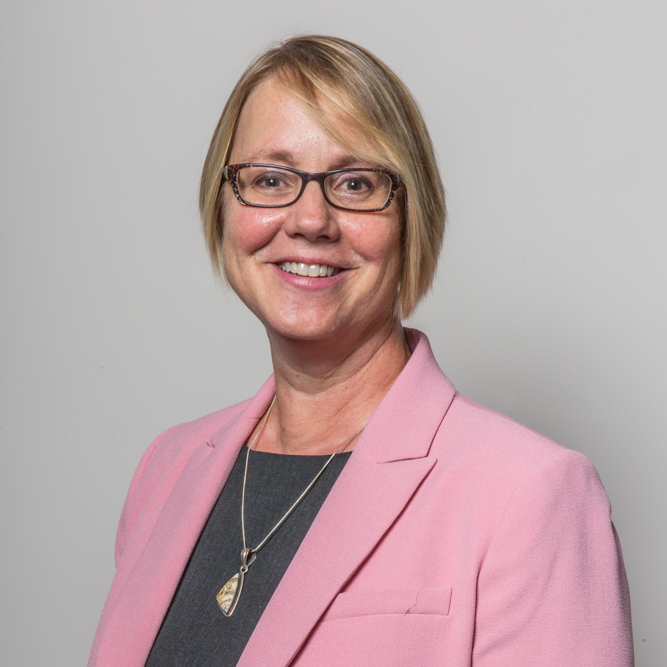
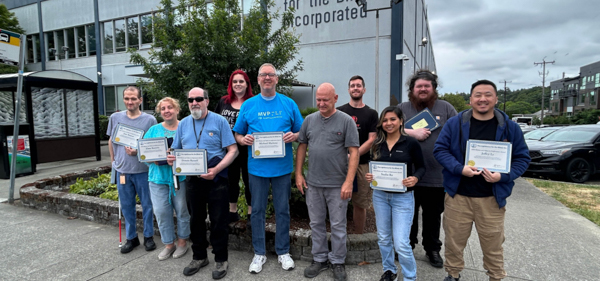
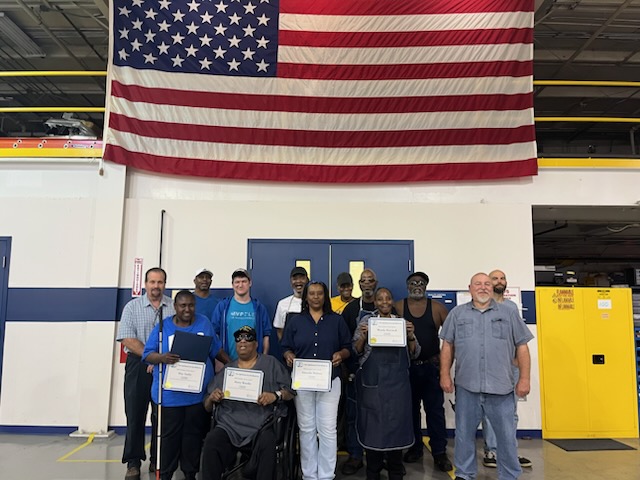
John Ott and Rachel Tally recieving their Journeyman certificate; AJAC cohort at graduation
After four years, 8,000 hours of on-the-job training, classroom instruction, and unwavering determination, two employees at The Lighthouse for the Blind, Inc. have reached an extraordinary milestone.
Rachel Talley and John Ott recently graduated from the Aerospace Joint Apprenticeship Committee (AJAC) Machinist Apprenticeship Program, earning their Journey-Level Machinist certification alongside 69 graduates from across Washington state.
The achievement represents far more than a diploma. It signifies years of dedication, technical mastery, and a commitment to continuous learning, all while working full time at the Lighthouse’s Seattle manufacturing facility.
For both Rachel and John, the journey reinforced an important truth: when people are given access to opportunity, training, and support, they can accomplish remarkable things.
A Four-Year Commitment to Excellence
The AJAC Machinist Apprenticeship is one of Washington state’s premier advanced manufacturing apprenticeship programs. Over four years, apprentices complete approximately 8,000 hours of paid, hands-on training while mastering machining principles, CNC programming, blueprint reading, precision measurement, manufacturing mathematics, safety, lean manufacturing, and production processes.
The program is demanding. Classes are held outside normal work hours, requiring apprentices to balance full-time employment, coursework, homework, and personal responsibilities.
“It’s a challenge,” Rachel said. “But if you really want to do it, just jump in feet first.”
That mindset carried her through late-night classes, multiple moves, and the challenges of balancing work and life while continuing her education.
Building Confidence Through Knowledge
Rachel, who operates two KOMO CNC routers at the Lighthouse, viewed the apprenticeship as an opportunity to deepen her machining skills and better understand the technology she works with every day.
Along the way, she learned CNC programming, machining fundamentals, troubleshooting techniques, and new approaches to solving manufacturing challenges.
“It’s basically shown that if I put my mind to something, I can do it,” Rachel said.
That confidence didn’t come without obstacles.
Early in the apprenticeship, one instructor hesitated to allow Rachel to work on manual machines because of her blindness. Rather than accepting those assumptions, she advocated for herself and demonstrated that safety comes from knowledge, preparation, and respect for the equipment, not from eyesight alone.
“I have a healthy respect for manual machines,” she said. “If I’m not comfortable doing it, I’m not going to do it.”
Today, Rachel is known for her growing expertise, creative problem-solving, and willingness to troubleshoot production challenges. She enjoys finding new solutions, refining machining processes, and continuing to expand her skills.
“I didn’t think I enjoyed manufacturing as much as I do,” she said. “I like working with my hands.”
Lifelong Learning Has No Age Limit
For John Ott, the apprenticeship represented another chapter in a lifelong commitment to learning.
John joined the Lighthouse more than 12 years ago after losing much of his vision due to retinitis pigmentosa. A former police officer and criminal justice instructor, he was determined to continue building a meaningful career rather than allowing vision loss to define his future.
When the opportunity to enter the AJAC apprenticeship became available, he wasn’t even sure he would be selected.
Instead, he not only completed the rigorous four-year program – he graduated with a perfect 4.0 GPA.
“I like having something to work on and continuing to learn,” John said. “It’s good for us to be lifelong learners.”
Throughout the apprenticeship, John adapted course materials, found accessible learning resources, and leaned on the support of his wife, Lindsay, and AJAC instructor Jeff Keller, whom he credits as instrumental to his success.
When textbooks weren’t fully accessible, John searched for online tutorials, listened to instructional videos repeatedly, and found alternative ways to master difficult concepts.
“I would find the knowledge in a way that I could take it in,” he explained.
That persistence paid off.
Today, John says the apprenticeship has given him a deeper understanding of machining, allowing him to produce higher-quality work, improve efficiency, and better collaborate with fellow machinists.
Manufacturing Careers Built on Collaboration
Although Rachel and John followed different paths through the apprenticeship, both emphasized that success was never achieved alone.
Coworkers, supervisors, instructors, mentors, and classmates all played important roles throughout the journey.
Whether troubleshooting a production issue on the manufacturing floor or working through complex coursework, asking questions, and learning from one another became part of the process.
“The more people you ever have with knowledge and depth of knowledge, the better job we’re going to do,” John said.
Rachel agrees that collaboration is one of manufacturing’s greatest strengths.
Sometimes, she said, solving a machining problem simply requires another perspective.
“You just need a fresh perspective,” she said. “Sometimes it’s something simple.”
Investing in People Strengthens Manufacturing
The Lighthouse’s partnership with AJAC reflects its longstanding commitment to developing skilled manufacturing professionals and creating meaningful career pathways for people who are blind, DeafBlind, and blind with additional disabilities.
By investing in advanced workforce training, employees gain nationally recognized credentials while strengthening the organization’s manufacturing capabilities for customers in aerospace, defense, and other precision manufacturing industries.
For Rachel, the apprenticeship reinforced her belief that challenging yourself leads to growth.
For John, it affirmed the value of continuous improvement throughout an entire career.
Both believe apprenticeship opportunities benefit not only employees, but also the entire organization.
“They teach you new skills,” Rachel said. “Sometimes you just learn a new way of doing the same thing.”
Looking Toward the Future
Graduation isn’t the end of the learning journey.
Rachel hopes to continue expanding her programming knowledge and eventually learn additional machining equipment at the Lighthouse.
John plans to keep applying what he has learned while encouraging others to pursue apprenticeship opportunities of their own.
His advice to future apprentices is simple: “Don’t think about four years. Think about one class at a time.”
That philosophy carried him through more than 8,000 hours of training and serves as a reminder that significant achievements are built one step at a time.
As Rachel and John celebrate earning their Journey-Level Machinist certification, they also represent something larger than individual success.
Their accomplishments demonstrate what is possible when talent is supported, barriers are removed, and people are given the opportunity to develop their skills.
Congratulations to Rachel Talley and John Ott on this remarkable achievement, and to all 69 graduates of this year’s AJAC Machinist Apprenticeship Program. Their dedication is helping strengthen Washington’s manufacturing workforce while proving that excellence is built through perseverance, continuous learning, and opportunity.