Finding Independence Through Work: Anousone’s Journey at the Lighthouse
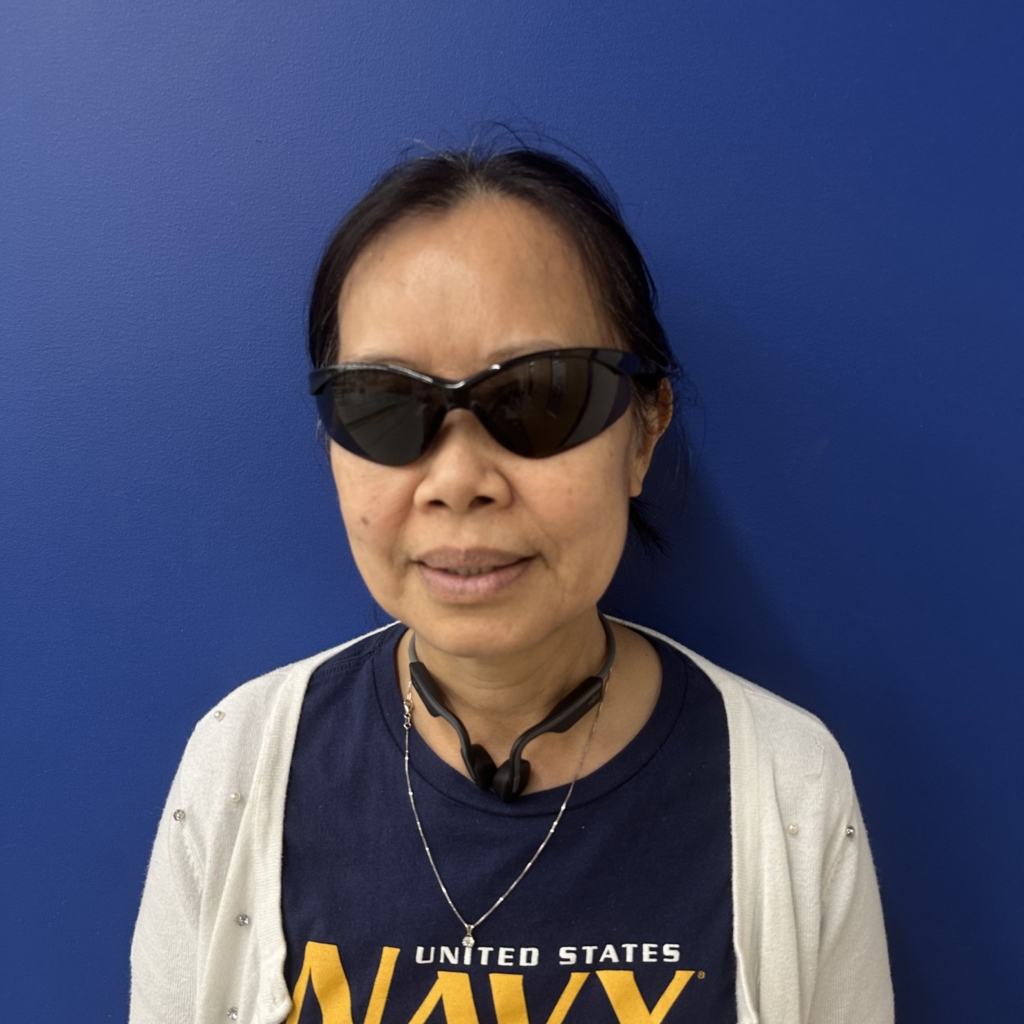
Anousone Zent portrait
For Anousone Zent, coming to work at The Lighthouse for the Blind, Inc. was about much more than finding a job. It was about rebuilding independence, confidence, and a sense of possibility after losing her vision.
A production employee at Lighthouse’s Spokane facility, Anousone has worked at the organization for approximately two and a half years. Her work includes assembly, boxing, labeling, kitting, and other production tasks. She takes particular pride in learning new jobs and producing quality work.
That willingness to learn has been a constant throughout a life marked by significant change.
Building a New Life in the United States
Anousone came to the United States from Laos with her family around 1990. Her family had fled Laos as refugees, eventually finding the opportunity to build a new life in the United States.
“We escaped, we survived, and coming to the United States is the best thing for me to learn and build myself and family,” she said.
Anousone worked hard to support herself and her family. She was self-employed for a time and remembers managing employees as well as ordering, shipping, and other aspects of running a business.
Then, approximately eight years ago, she began losing her eyesight.
The change was devastating. Doctors initially struggled to determine what was causing her vision loss, and it took years before retinal damage was identified. By that time, Anousone said, treatment options were limited.
Losing her vision also meant losing the working life she had known.
Searching for a Way Back to Work
After leaving her job, Anousone struggled with depression and withdrew from many of the activities that had previously been part of her life.
Eventually, her daughter became one of her motivations for moving forward. As her daughter prepared for college, Anousone wanted her to be able to pursue her future without worrying about her mother.
“I have to tell myself, let’s do something, get up and do something,” Anousone recalled.
She began searching for employment, but finding an employer prepared to accommodate a blind worker proved difficult.
One experience was particularly painful. After multiple interviews for a job at a spa, Anousone was hired. She arranged her transportation and prepared to begin working. Then, the day before she was scheduled to start, she received a call from her new to-be employer that they could not move forward because of liability concerns.
The experience was especially frustrating because Anousone knew what she was capable of doing. Before losing her vision, she had successfully worked, managed a business, supervised employees, and handled responsibilities ranging from ordering to shipping.
Then she learned about the Lighthouse’s Spokane facility.
She called repeatedly, even when she was told there were no openings.
“I want to work, I really want to work,” she remembers telling staff. Eventually, an opportunity opened.
“I’m so happy to get a job and earn my income, earn my independence,” she said. “And I know I can take care of myself.”
Learning New Ways to Be Independent
Since joining the Lighthouse, Anousone has embraced opportunities to develop skills both on and off the production floor.
She has participated in Orientation and Mobility and technology training, learning skills she had never used before losing her vision. She has also taken career development classes, attended webinars, and listened to other blind people share strategies for building successful, independent lives.
At work, she brings the same enthusiasm to learning new production tasks.
“I learn a lot of everything,” she said of her job. Her responsibilities have included assembly, boxing, labeling, kitting, and other production work.
She especially enjoys the jobs she has mastered, including putting kits together, and takes pride in being someone coworkers can rely on to complete those tasks well.
Bringing Leadership to the Production Floor
Although Anousone’s current position is in production, the leadership skills she developed while self-employed remain part of how she approaches her work.
She sees production as a team effort. When problems arise, she works with coworkers to find solutions and make sure the finished product meets quality expectations.
She also encourages others to take advantage of training opportunities.
“If they have a class or training, I always tell people, if you need the class, take the class,” she said, adding that she is willing to help coworkers participate.
For Anousone, independence does not mean doing everything alone. It means having the skills, resources, and confidence to take care of herself while also being able to contribute to the people around her.
A Different Outlook on What Is Possible
The changes Anousone describes since coming to the Lighthouse extend well beyond her paycheck.
“Working here is my life,” she said. “It changed my life, my thinking.”
She credits coworkers, managers, and staff with helping her learn new ways of doing things and become more independent after vision loss.
“I’ve been depressed before, I was so negative and then now I am thinking positive,” she said.
Even getting to work independently required learning. Transportation was initially overwhelming, and she sometimes became lost. Rather than giving up, Anousone approached the challenge the same way she approaches learning a new job: step by step.
Today, she describes independence as one of her most important goals.
“I feel like I’m successful and earn my income and help myself not depend on people,” she said.
Outside of work, Anousone enjoys spending time with family and friends, exercising, swimming, and singing karaoke—even though she jokes that she may not be the best singer. Mostly, she says, she is “just trying to enjoy my life.”
For someone who once wondered whether losing her vision meant losing her ability to work and live independently, that simple statement represents something significant.
Anousone is working, earning her own income, learning new skills, helping coworkers, and continuing to set new goals for herself.
And she isn’t finished learning.
“The training, the class, the mobility technology, it helped me,” she said. “Hopefully someday I will be learning more and successful in what I want to do.”